Meet Bridgette Lang ’26: A Rangel Fellow’s Journey Through SIPA
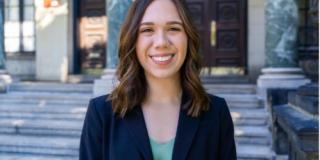
Bridgette Lang ’26 is a second-year student pursuing a Master of Public Administration with a concentration in International Security Policy and a specialization in Technology, Media, and Communications. At SIPA, she is a teaching assistant for Quantitative Analysis I and the former Opinions Editor of The Morningside Post. She graduated from Boston University with a bachelor’s degree in international relations and a minor in European studies. Prior to attending SIPA, Bridgette served as a 2023–24 Fulbright English Teaching Assistant in Lithuania. Her interest in public diplomacy also led her to internships with the U.S. Department of State, the United Nations High Commissioner for Refugees (UNHCR), the U.S. Agency for International Development (USAID), and the Mayors Migration Council. As a Charles B. Rangel International Affairs Fellow, she plans to join the Foreign Service after graduation.
I asked Bridgette to reflect on her journey as a Rangel Fellow and what being part of the SIPA community has meant to her so far. Here’s what she had to say:
What drew you to SIPA originally, and how did you know it was the right fit for your academic and professional goals? As someone hoping to pursue a career in public diplomacy, I was drawn to SIPA because of the Technology, Media, and Communications specialization (now Technology Policy and Innovation concentration), which offers the opportunity to take coursework in international communications and apply it to my future career. My undergraduate coursework was mostly in foreign policy, and I want to build hard skills in communications to make my transition into the foreign service easier. Another factor that drew me to SIPA was its international student body. Before arriving, I didn’t realize how many students were also public servants for their governments. Although we’re on separate journeys, it’s nice to relate to others in that way and learn how they view the world.
How has your experience as a Rangel Fellow shaped your time at Columbia — academically, professionally, or personally? Especially during my first year, being a State Department Fellow gave me a built-in community. Graduate school can be daunting in the first semester as you adjust to the challenging coursework and the social aspects of being back in school. The Fellowship gave me a network of people I could rely on both socially and as future colleagues. Their support has been so meaningful, and I know that they will continue to be a part of my life after graduating.
You’ve worked across several international institutions (State Department, UNHCR, USAID, etc.). How has SIPA helped you connect classroom learning with real-world policy work? At SIPA, we’re encouraged to interact with professionals in the field in nearly all of our coursework. Oftentimes, our professors are adjuncts who concurrently hold positions outside of the university. Their networks have played a significant role in my education by providing opportunities for site visits and guest speakers. I’ve been able to visit the headquarters of Human Rights Watch and observe a budget hearing at City Hall thanks to my SIPA experience.
As a Teaching Assistant for Quantitative Analysis I, what advice would you give incoming students who feel nervous about the quantitative curriculum? Coming into SIPA, I didn’t have much of a quantitative background. Although I took statistics in high school, I didn’t take a single math class in undergrad. Quantitative Analysis can be challenging, but there are so many resources available to students that you can succeed. Quant really builds your confidence in conducting and interpreting research, and this is a valuable skill that I use every day when reading or starting projects for my other classes.
How has being part of the SIPA community—classmates, faculty, or extracurriculars like The Morningside Post—influenced your graduate school experience? Because SIPA has such a large and diverse student body, it can sometimes be easy to feel a bit lost at first. We come from all over the world, and I have classmates who have worked in so many sectors. Finding your people can be a little easier if you make the effort to join organizations on campus. I found that through The Morningside Post. What was especially amazing was how my interactions extended beyond the organization itself. Other students would read our articles and discuss them with me after publication, and I had the chance to work with many amazing student contributors.
What is one challenge you faced during your time at Columbia, and how did you navigate it? At the beginning of my SIPA journey, I switched into the International Security and Diplomacy concentration. It was a difficult decision to move out of the concentration I originally applied to, but what helped most was thinking about the type of work I hope to do in the Foreign Service and which courses would best support that goal. Being able to take classes with former ambassadors and discuss American grand strategy in practice has given me the chance to gain skills I’ll take with me to the State Department.
Looking back, what advice would you give prospective students who are considering SIPA but aren’t sure if it’s the right next step for them? As one of the largest and most diverse public policy schools, I believe most people can find their fit at SIPA. Because of its sheer size, there are countless opportunities, courses to take, and people to meet. Having so many options of how to tailor your time, I knew I would be able to meet my specific academic and professional goals here. If you feel the same way, SIPA would also be a good fit for you.