Léopold Senghor, Asilah and “Afro-Arab Civilization"
Sep 2025
Nka: Journal of Contemporary African Art
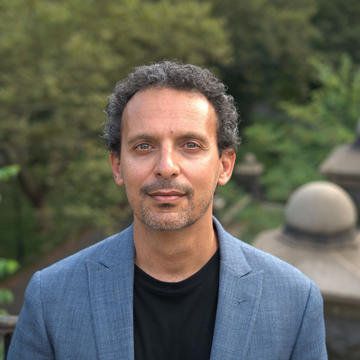
Senior Lecturer in the Discipline of International and Public Affairs
Focus areas: Critical international relations, post-colonial theory, Black Studies and the political economy of development.
Hisham Aidi is a Senior Lecturer in the Discipline of International and Public Affairs. His research interests include critical international relations, post-colonial theory, Black Studies and the political economy of development. He received his PhD in political science from Columbia University, and has taught at the Driskell Center for the Study of the African Diaspora at the University of Maryland, College Park. Aidi is the author of Redeploying the State (Palgrave, 2008) a comparative study of political parties and labor movements in Latin America, and Rebel Music: Race, Empire and the New Muslim Youth Culture (Pantheon, 2014), a study of American cultural diplomacy, and winner of the American Book Award of 2015. He is co-editor with Manning Marable of Black Routes to Islam (Palgrave 2009), and co-editor of Race-Making: A Trans-Regional Approach – from Africa to Southwest Asia (forthcoming Cornell University Press 2026).
From 2007 to 2012, Aidi was a contributing editor of Souls: A Critical Journal of Black Culture, Politics and Society. His work has appeared in Africa Is A Country, The Atlantic, Foreign Affairs, The Nation and The New Yorker.
Aidi is academic advisor to the Malcolm X & Dr. Betty Shabazz Memorial and Educational Center, and a founding editor of the Souffles, a journal interested in cultural decolonization. He is also a co-founder of the Program for African Social Research (PASR).
Nka: Journal of Contemporary African Art
The MIT Press
Daedalus
Islamophobia Studies Journal
International Journal of Middle East Studies

In the film Soundtrack to a Coup d'Etat, "You have the freedom, idealism and truth-telling of jazz," says Hisham Aidi, "juxtaposed against the cynicism and double talk of realpolitik."
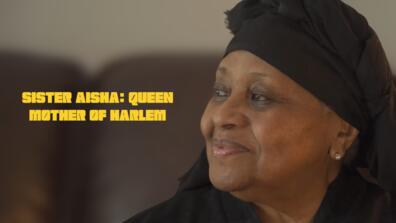
Funded through the Columbia Provost’s Addressing Racism initiative, the film highlights important links between Harlem and the University