Understanding Institutional Weakness: Power and Design in Latin American Institutions
Jun 2019
Cambridge University Press
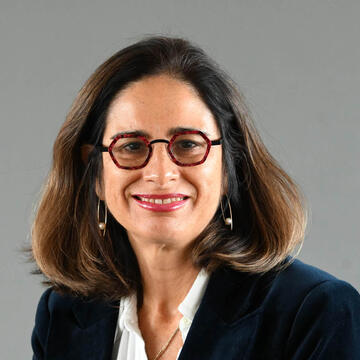
Professor of Political Science and International and Public Affairs
On Leave in Fall 2025
Focus areas: Political sustainability of the commodity boom, linkages between parties and richer and poorer voters, the economic determinants of electoral volatility in Latin America, legislators and economic representation in Argentina, weak institutions in Latin America
Maria Victoria Murillo (Ph.D., Harvard, 1997) holds a joint appointment with the Department of Political Science and the School of International and Public Affairs and is currently the Director of the Institute for Latin American Studies (ILAS).
Murillo is the author of Labor Unions, Partisan Coalitions, and Market Reforms in Latin America, which was translated as Sindicatos, Coaliciones Partidarias y Reformas de Mercado en América Latina by Siglo XXI Editores and Political Competition, Partisanship, and Policymaking in the Reform of Latin American Public Utilities. She is also the co-author of Non-Policy Politics: Richer Voters, Poorer Voters, and the Diversification of Electoral Strategies with Ernesto Calvo (Cambridge University Press 2019) and Understanding Institutional Weakness: Power and Design in Latin American Institutions (Cambridge University Press, Element in Latin American Politics and Society Series, 2019) with Daniel Brinks and Steven Levitsky. She is also the co-editor of Understanding Weak Institutions: Lessons from Latin America (Cambridge University Press, forthcoming 2020), Argentine Democracy: The Politics of Institutional Weakness (Penn State University Press 2005), Carreras Magisteriales, Desempeño Educativo y Sindicatos de Maestros en América Latina (Flacso, 2003), and Discutir Alfonsín (Siglo XXI, 2010). Her work has also appeared in International Organization, World Politics, American Journal of Political Science, Comparative Politics, Comparative Political Studies, World Development, the Annual Review of Political Science, and many Latin American academic journals.
Murillo's research on distributive politics in Latin America has covered labor politics and labor regulations, public utility reform, education reform, agricultural policies, and economic policy more generally. Her more recent work focuses on electoral behavior, contentious dynamics, and the analysis of institutional weakness. Her empirical work is based on a variety of methods ranging from quantitative analysis of datasets built for all Latin American countries to qualitative field work in Argentina, Chile, Mexico, and Venezuela and survey and experiments in Argentina and Chile.
Murillo received her B.A. from the Universidad de Buenos Aires and her M.A. and Ph.D. from Harvard University. Murillo has taught at Yale University, was a postdoctoral fellow at Harvard University (Harvard Academy for Area Studies & David Rockefeller Center for Latin American Studies), and at the Russell Sage Foundation, as well as a Fulbright fellow.
Cambridge University Press
Cambridge University Press
Latin American Politics and Society
Electoral Studies Volume 45
Electoral Studies

If President Javier Milei cannot control inflation and translate his market-oriented agenda into tangible gains for a majority of Argentines, the electorate that brought him to power may quickly turn elsewhere, says SIPA Professor Victoria Murillo.
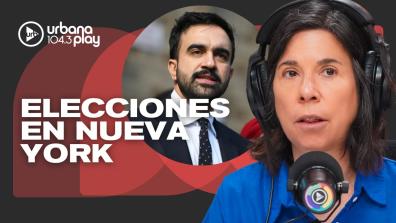
Vicky Murillo, Professor of Political Science and International and Public Affairs, spoke on De Acá en Más about the NYC Mayoral Election results.
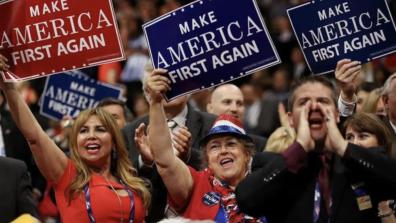
"Milei has always been very loyal to Trump," Victoria Murillo, professor of political science and director of the Institute of Latin American Studies at Columbia University, tells BBC Mundo. "There doesn't seem to be any explanation beyond geopolitics and the connection between the two."
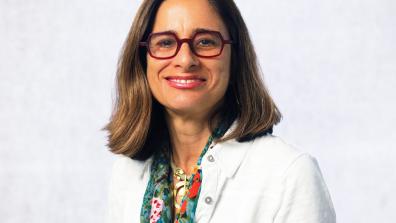
A political science professor explains how voters are shopping around this year.
Through a series of major events and convenings—including those organized by the Institute of Global Politics (IGP), the Center on Global Energy Policy (CGEP), and the Arnold A. Saltzman Institute of War and Peace Studies (SIWPS)—SIPA tackled some of the most important domestic and foreign policy issues of the new administration’s first 100 days.