Image
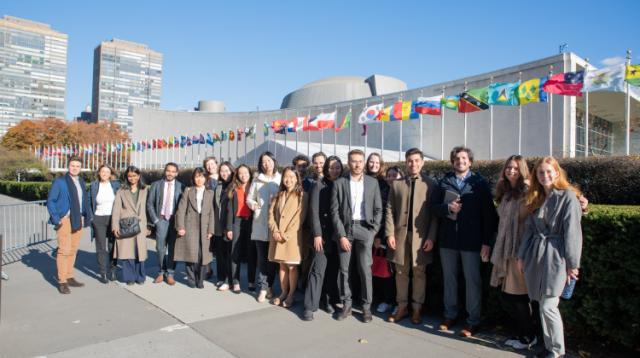

Columbia University and SIPA’s connections with the United Nations
The countless connections linking Columbia University and SIPA’s past and present with the UN and other international organizations
Upon accepting the 2016 Columbia SIPA Global Leadership Award, former UN Secretary-General Ban Ki- moon remarked that Columbia University “played a pivotal role in the formation of the United Nations. The dean of Barnard and two political science professors were instrumental in drafting our Charter. Since then, SIPA faculty and alumni have continued to play significant roles in our endeavors. Personally, I rely on many of them as my senior advisers.”1
This statement not only underscores the historical connection between Columbia and the UN but also emphasizes the ongoing contributions of SIPA faculty and alumni to global governance and diplomacy. It highlights the critical role that academic institutions like SIPA have played in shaping the trajectory of international affairs in the past and their importance to shaping global affairs in the future.
Arguably, no other university has been more engaged with the creation and development of the United Nations than Columbia University. Since its founding in 1946, Columbia SIPA has been a cradle for future diplomats and thought leaders, advising and steering multilateral institutions, teaching cutting-edge knowledge to tomorrow’s world leaders, and thus shaping a body of globally minded international civil servants and diplomats.
While SIPA has evolved over time, its core mission remains steadfast in its commitment to building leaders capable of serving the public and addressing critical public policy issues on a global scale.2 SIPA’s enduring purpose is to educate and empower students to serve and lead, thereby supporting the global public interest and fostering positive change.
This overview of the past and present of Columbia and SIPA’s engagement with international organizations, and particularly the United Nations, illustrates the enduring partnership and SIPA’s focus on, and commitment to, advancing global governance and diplomacy.
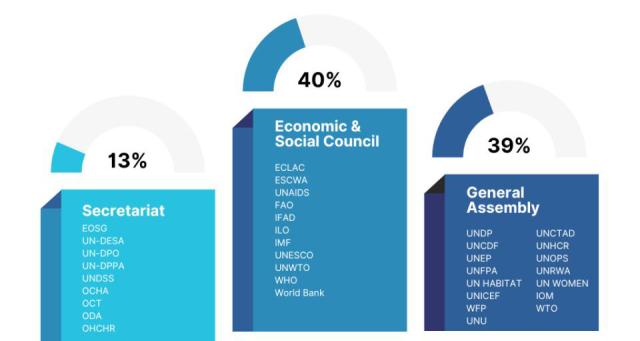
Today, approximately 120 faculty members are affiliated with 40 international organizations, including many UN agencies, funds, and programs. Nearly 60 current faculty members have served as staff members at the UN or other IOs, half of which hold or have held executive leadership positions within the UN system –from Director-level to Under-Secretary-General. SIPA’s new UN Partnership Initiative amplifies faculty engagement with the United Nations and other IOs.
For more on faculty involvement with international organizations, see Section One below.
Columbia and Barnard professors James T. Shotwell, Virginia Gildersleeve, and Philipp Jessup, and also Andrew Wellington Cordier, who would later serve as SIPA’s second dean, played pivotal roles at the 1945 San Francisco Conference during the drafting of the Charter of the United Nations and the Statute of the International Court of Justice. In addition, Leo Pasvolsky, who attended Columbia, is often viewed as one of the foremost authors of the UN Charter. Jessup was also chiefly involved in the 1944 Bretton Woods Conference that led to the establishment of the World Bank and the International Monetary Fund.
For more on Columbia and SIPA’s historical engagement with international organizations, see Section Two below.
At the launch of SIPA (which was then called the School of International Affairs, or SIA), founding director Professor Schuyler C. Wallace highlighted the school’s mission to train a selected number of students contemplating careers in diplomacy or international organizations. Among the first programs SIA/SIPA created was a United Nations internship program and the student-led Society of the School of International Affairs started its activities in 1947 with a trip to UN Headquarters, which at that time was based in Lake Success on Long Island. Its building in New York City was being built by Columbia School of Architecture alumnus Max Abramovitz and his partner – the same architects that later also designed SIPA’s home: the International Affairs Building. Dean Cordier is best remembered as an indispensable figure in the first sixteen years of the UN, where he served as executive assistant to the first two Secretaries-General of the UN, Trygve Lie and Dag Hammarskjöld, and also future deans had many close connections to, and senior appointments at, international organizations.
For more on SIPA institutional links with international organizations, see Section Three below.
Courses hone in on the role of the UN in development, to solve conflict, keep the peace, and work toward addressing climate change, migration, displacement, and food insecurity. Courses focus on political negotiations at the UN General Assembly, the global debt architecture, UN frameworks for monitoring and evaluation, communication, and innovation at international organizations, thus training tomorrow’s leaders of multilateral cooperation.
For more on SIPA educational offers on international organizations, see Section Four below.
From holding prominent leadership positions within the United Nations system and other international organizations to shaping global policies and practices through country representations at the UN, SIPA alumni continue to make significant contributions to international affairs. Today, more than 1,200 alumni work at international organizations or their countries’ missions to the UN. Historically, two SIPA alumni served as Presidents of the UN General Assembly and later ran for UN Secretary-General. At least eight Columbia University alumni have been appointed Under-Secretary-General, seven of whom graduated from SIPA and at least a dozen SIPA graduates have held positions as UN Resident Coordinator and Humanitarian Coordinator around the world. In addition, more than 10 alumni have represented their country as Ambassadors or Deputy Permanent Representatives to the United Nations, including from the US, Indonesia, Tanzania, Madagascar, and the Dominican Republic. The number of alumni who have held influential roles that have directly shaped global policies and practice is a testament to the strong, decades-long institutional partnership between Columbia University and the world’s leading international organization.
This overview of the past and present of Columbia and SIPA’s engagement with international organizations, and particularly the United Nations, illustrates the enduring partnership and SIPA’s focus on, and commitment to, advancing global governance and diplomacy.
For more on SIPA's alumni leadership positions within the UN system, see Section Five below.
Since its inception in 1946, Columbia University’s School of International and Public Affairs (SIPA) has existed to bolster the work of the United Nations and further contribute to effective public service, through both its student body and faculty.
Building on a rich history of partnership and collaboration, SIPA faculty remain deeply engaged in the work of international organizations. Today, approximately 120 faculty members are affiliated with IOs, representing 40 organizations, including many UN agencies, funds, and programs. Faculty are most prominently affiliated with the World Bank, the International Monetary Fund, UNDP, UNICEF, and the UN Department of Peace Operations. Other agencies include the Executive Office of the Secretary-General, UNAIDS, UN Capital Development Fund, UN Trade and Development; and the UN Departments of Economic and Social Affairs; Political and Peacebuilding Affairs; as well as Safety and Security. Other specialized agencies and programs with faculty collaborations are UNESCO, the UN Environment Program, World Food Programme, Food and Agriculture Organization, International Fund for Agricultural Development, International Labor Organization, World Health Organization, World Trade Organization and UN Habitat.
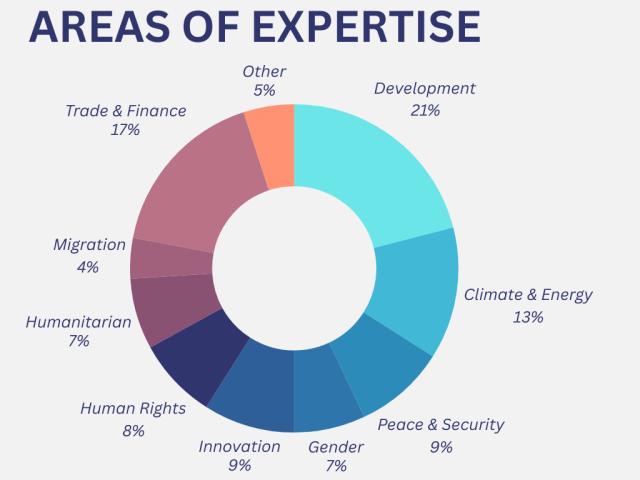
Nearly 60 current faculty members are or were staff members at the UN or other international organizations, half of which hold or have held executive leadership positions within the UN system –from Director-level to Under-Secretary-General. Some notable examples, to name just a few, include:
Other faculty members actively contribute through ongoing consultancy projects, advisory roles, and research and several faculty members influence global discussions as members of UN commissions and committees at the highest level. Faculty involvement in the UN is a prominent entry point for many talented SIPA students who wish to engage with the organization’s work through teaching assistantships, program assistantships, research projects, capstone consultancies, and summer placements. In addition to SIPA faculty, more than 210 faculty members across Columbia University are currently active, or have previously been actively involved, in the work of the United Nations.
Since UN Day in October 2021, SIPA has been further shaping the global discourse through the blog Multilateralism in Action, edited by Professor Daniel Naujoks. Leading experts in both practice and research provide insights into the determinants, modalities, and outcomes of multilateralism on a diverse array of topics, including human rights, development, climate change, peace and security, international law, careers in international organizations and many other areas.
Since 2023, SIPA’s new UN Partnership Initiative (UNPI) has amplified faculty engagement with the United Nations and other international organizations. It supports SIPA’s role as the academic partner of choice for the UN by facilitating action research on global issues, creating opportunities for researchers and faculty to contribute actively to UN processes, and forging stronger partnerships between IOs and SIPA.
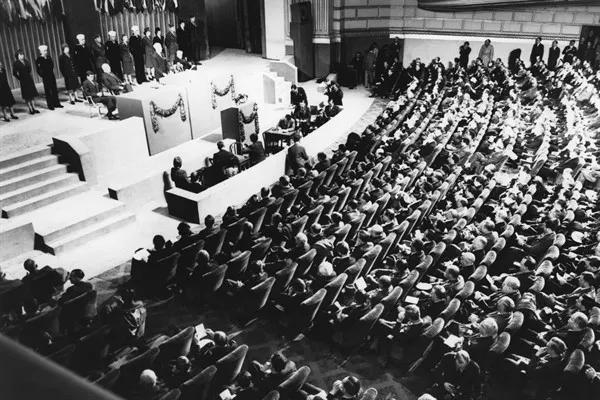
Columbia faculty and alumni were actively involved in drafting the UN Charter. The seeds of effective and collaborative efforts started at the 1945 San Francisco Conference during the drafting of the Charter of the United Nations and the Statute of the International Court of Justice.3 Esteemed professors from Columbia University, namely James T. Shotwell, Virginia Gildersleeve, and Philipp Jessup, played pivotal roles in this historic endeavor.
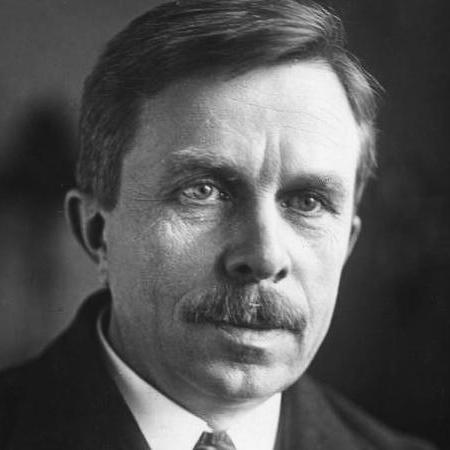
James T. Shotwell, a distinguished Professor of the History of International Relations, chaired the conference’s semi-official American group tasked with formulating the economic and social provisions of the UN Charter. His presence and influence were instrumental in shaping some of the most significant international institutions of the twentieth century.
Shotwell envisioned this period as the onset of a new era, characterized by rapid technological advancements that demanded innovative approaches to resolving interstate conflicts.4
Remembering his crucial engagement in the drafting of the UN Charter, Columbia Professor James T. Shotwell highlighted that he had “never had a more inspiring experience” than in this effort to “weld the aspirations to peace into a worldwide organization.”5
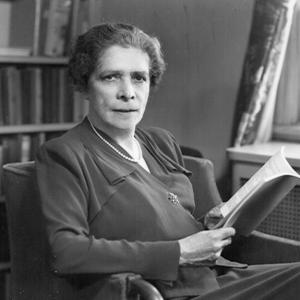
Virginia Gildersleeve, who served as the dean of Barnard College for over three decades, from 1911 to 1947, emerged as a leading advocate for women’s education. Alongside distinguished academics such as James Shotwell and Nicholas Butler, she made significant contributions to the Commission to Study the Organization of Peace, affiliated with the United Nations. This commission was a driving force for “internationalism,” advocating for global American military leadership.6 Their research and recommendations greatly influenced the formulation of the UN Charter, with Gildersleeve being notably the only woman appointed by the United States to represent the nation at the San Francisco Conference.7
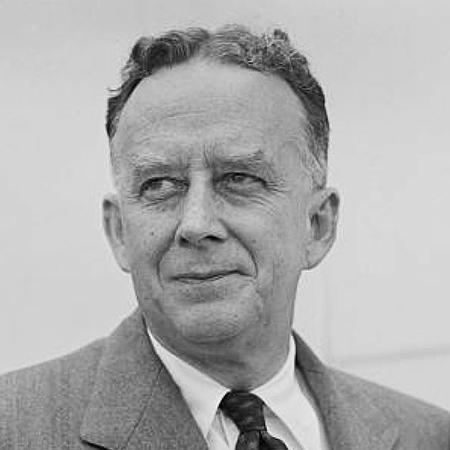
Philipp Jessup also made substantial contributions to drafting the charters and statutes that formed the basis of numerous prominent international organizations.
Jessup’s influence extended to his involvement as assistant secretary at the Bretton Woods Conference in 1944, which led to the establishment of the World Bank and the International Monetary Fund. Post-World War II, he played a vital role in crafting the statute of the International Court of Justice and served on the Committee on the Codification and Progressive Development of International Law, which was responsible for drafting the statute of the International Law Commission. Throughout this period, Jessup maintained close ties with Columbia Law School, where he was appointed the Hamilton Fish Professor of International Law and Diplomacy. In addition to his academic pursuits, Jessup excelled as a skilled diplomat at the United Nations. Between 1948 and 1953, he served as deputy US representative to the United Nations Security Council.
Beyond faculty, Leo Pasvolsky, who attended Columbia, is often viewed as one of the foremost authors of the UN Charter.10 As a state department official and special assistant to US Secretary of State Cordell Hull he prepared the original text and was present during all the drafting sessions,11 which is why his New York Times obituary is subtitled “Wrote Charter of World Organization.”
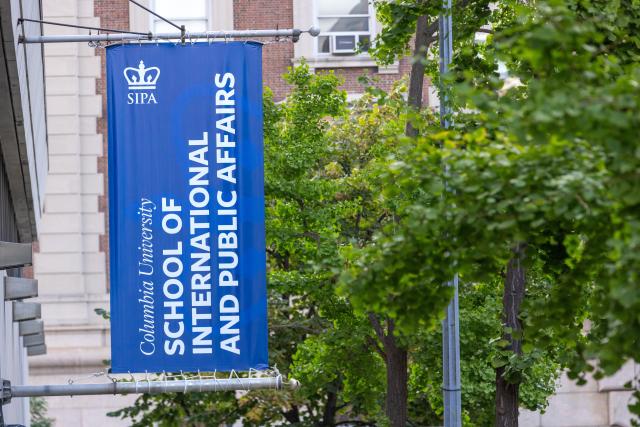
The School of International Affairs (which in 1981 was renamed as the School of International and Public Affairs) — SIA, or now SIPA, was established in 1946. It was built on the foundation of Columbia’s Parker School of Advanced International Studies that since 1931 operated under the Faculty of Political Science “to provide a course of instruction which will equip a limited number of students for staff and administrative posts in the international fields.”
At the launch of the school, SIA founding director Professor Schuyler C. Wallace laid out the vision for the new “advanced school for the training of a selected number of students contemplating careers in diplomacy, foreign business, or in international organizations.”
SIA/SIPA’s “purpose is to provide a course of instruction which will equip a limited number of students for staff and administrative posts in international fields. … To this end the curriculum has been designed with three objectives in view: first, to provide the student with a satisfactory factual background in international affairs; second, to give him, in so far as an academic program can, an understanding of the forces and factors operating in these fields; and third, to develop his technical competence in a specialty such as international law, international economics, international business administration, government service, or international administration, which will enable him to put his more general knowledge to practical use.”14
To equip students for staff and administrative roles in international fields, among the first programs, SIA/SIPA created a United Nations internship program that would turn “students to be fairly frequent visitor(s) at Lake Success [on Long Island, NY, where the UN headquarters was located from 1946 to 1952, while its building in New York City was being built] and in some instances to serve with the United Nations in their internship program.”15
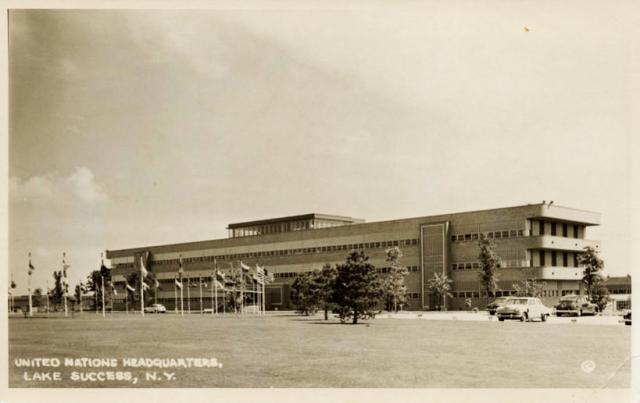
The strong connections between the UN and SIA/SIPA go beyond the academic and professional programming. At the start of the new school, SIA/SIPA students established the Society of the School of International Affairs “to develop the student body into a well-integrated and active group through a program of speakers, student and faculty forums, field trips and social activities.” The second activity the Society ever conducted was a student-led trip to UN Headquarters in Lake Success. It’s noteworthy that similar activities are still regularly organized by today’s students and our student-led United Nations Association to facilitate the exchange of ideas and foster a sense of belonging within both the academic community and among partners in international organizations like the United Nations.
Another fact that illustrates the close ties between SIPA and the UN is the shared architectural heritage of their buildings. The renowned architectural firm Harrison & Abramovitz—whose partner Max Abramovitz '31 GSAPP was a Columbia alumnus—designed both the UN Secretariat Building and SIPA's International Affairs Building. The Secretariat Building, one of four main structures at the UN headquarters in Manhattan's Turtle Bay neighborhood, and the International Affairs Building, which has been SIPA's home since 1970, showcase this common design lineage.
Within the historical narrative linking Columbia University, SIPA, and the UN, another figure stands out prominently: Andrew Wellington Cordier, who is perhaps best remembered as an indispensable figure in the first sixteen years of the United Nations. Initially a professor at Manchester College, Cordier later served in the Department of State and contributed significantly to the drafting of the UN charter. Notably, he served as a technical expert on the US delegation during the founding conference of the United Nations in San Francisco. Cordier’s diplomatic prowess was evident throughout his tenure as executive assistant to the first two Secretaries-General of the UN, Trygve Lie and Dag Hammarskjöld, a position he held from 1946 to 1961. Additionally, he served as the principal advisor to all presidents of the General Assembly and played a crucial role as a special representative of Secretaries-General in crisis zones.
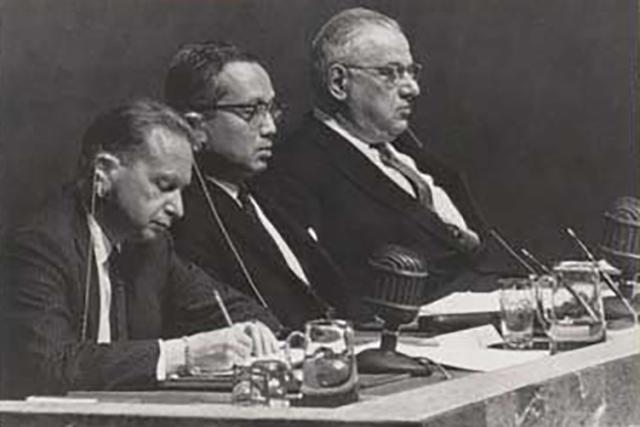
Cordier’s association with Columbia University began with his appointment as the second dean of SIPA in 1962, marking the beginning of a transformative period for the school. Cordier epitomized the intersection of academia, diplomacy, and leadership, leaving an indelible mark on both Columbia University and the United Nations.
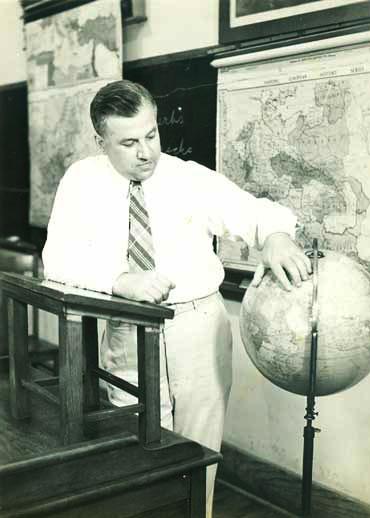
Subsequent deans continued the deep connection between SIPA and international organizations. John Ruggie served as assistant secretary-general and chief advisor for strategic planning to UN Secretary-General Kofi Annan. He continued to serve as the UN Secretary General’s Special Representative for Business and Human Rights and was one of the architects of the United Nations Global Compact, as well as of the Millennium Development Goals, the precursor of the Sustainable Development Goals. Before joining SIPA, Merit Janow was the first woman to serve as one of the seven members of the World Trade Organization’s Appellate Body.
This institutional evolution underscores SIPA’s and Columbia University’s enduring commitment to fostering engagement and innovation in addressing global challenges. The historical relationship between Columbia University and SIPA faculty with the United Nations is palpable and profound. The contributions of Columbia and SIPA faculty underscore the School’s enduring commitment to producing leaders capable of serving the public and addressing critical global challenges. As SIPA continues to innovate and collaborate, its ongoing partnership with the United Nations stands as a symbol of hope and progress in addressing the world’s most pressing challenges.
Since 2000, SIPA has had a dedicated International Organizations and UN Studies Program. SIPA professors with a deep connection to the UN have created academic, policy, and experiential learning opportunities, including directors Naomi Weinberger, Edward C. Luck, Stephen Marks, Dirk Salomons, Elisabeth Lindenmayer, Daniel Naujoks, and Stephen Biddle.
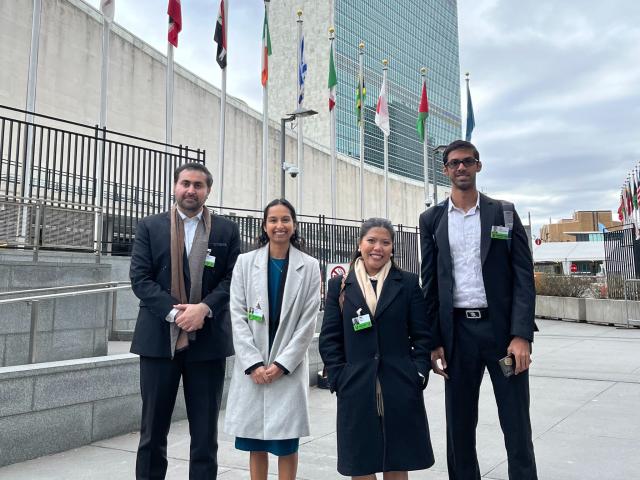
Through courses, talks, visits, and networking events, SIPA helps students reach a critical understanding of international organizations and global governance. We expose students to the complexity of multilateral organizations and investigate UN activities from the perspectives of public policy, global politics, and international relations. In SIPA’s new curriculum, students can choose the focus area or a minor on the UN and International Organization under the new International Security and Diplomacy concentration.
More than 40 courses touch on various aspects of multilateral activities, including United Nations & Globalization; Governance, Reform & Management in the UN System; Engaging Non-State Armed Groups: Lessons from the UN and Beyond; UN Development System in Action; and Evaluation in the UN System.
Students not only acquire specific skills and knowledge but also have many opportunities to access the UN and connect with alumni with UN interests and backgrounds. SIPA regularly hosts presidents of the UN General Assembly, UN secretaries-general, and the heads of UN programs, funds and specialized agencies. In addition to lectures and interactions in the classroom, SIPA often organizes workshops, in which faculty and students comment on draft UN reports and strategies. This way, SIPA acts as an ideas’ lab for multilateral processes. Recent experiences include workshops on the World Bank’s World Development Report, UNDP’s Human Development Report, or the Columbia-UN75 Hackathon for Climate, Peace & Development. In terms of networking, our annual International Organizations and UN Roundtable Conversations brings together more than 100 SIPA students with dozens of UN experts from 20 agencies, who discuss key aspects of their work with small groups of rotating students.
This overview of the past and present of Columbia and SIPA’s engagement with international organizations, and particularly the United Nations, illustrates the enduring partnership and SIPA’s focus on, and commitment to, advancing global governance and diplomacy.
With a world-renowned graduate curriculum designed to equip students with the practical and analytical skills necessary for effective public service, it is no surprise that some of the world’s most influential leaders, politicians, and global changemakers are SIPA alumni.
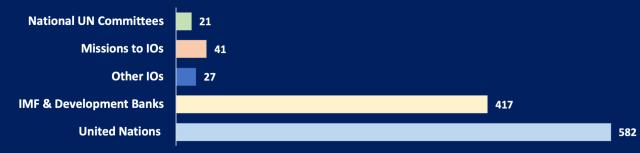
Today, more than 1,200 alumni work at international organizations or their countries’ missions to the UN. Dozens of our graduates have used their training in international relations, diplomacy, and public policy to hold prominent leadership positions within the UN system, from country-level resident and humanitarian coordinators and UN agency representatives to global portfolio directors, UN ambassadors, and under-secretaries-general.
Presidents of the UN General Assembly, Security Council, and Campaigns for Secretary-General
Notably, two Columbia alumni (one from SIPA) have served as president of the United Nations General Assembly: Carlos P. Romulo ’21 GSAS (1949–50), and Salim Ahmed Salim MIA ’75 (1979) – who also served as president of the UN Security Council (1976) and ran for UN Secretary-General in 1981. During his time as permanent representative of Tanzania to the UN (1970–80), Salim was also pursuing a Master of International Affairs at SIPA.
UN Senior Leadership Positions
Numerous SIPA alumni have been appointed under-secretary-general,22 the second highest rank in the UN system, covering prominent global portfolios such as Political Affairs, and Communications and Public Information, as well as senior positions like Associate Administrator for UNDP, and Rector of the United Nations University. Several SIPA alumni have also been appointed assistant secretary-general,23 the third highest rank in the UN system, most prominently heading departments for Peacebuilding Support, Human Rights, and acting as UNDP regional directors for Africa, Latin America, and the Caribbean.
Ambassadors to the United Nations
Several well-known diplomats began their careers at SIPA, including many ambassadors and permanent representatives to the UN. Among them was Madeleine Albright CERT ’68, ’76 GSAS, US ambassador to the United Nations (1993–97), who later went on to serve as the first female US Secretary of State (1997–2001). More than ten graduates of Columbia have represented their country as ambassador or deputy permanent representative to the United Nations. The depth and breadth of the countries that SIPA alumni have represented are indicative of its status as the world’s most international public policy school.
Other Notable Alumni and Columbia Fellows
Other notable SIPA alumni include Edward Luck MIA ’72 who served as special advisor to the UN Secretary-General on the Responsibility to Protect (2008–12), and who later taught at SIPA. Rebecca Allison Jovin MIA ’05 served as chief of strategic planning and operational support for the Unit of Mine Action Service within the Department of Peace Operations; and David Kay MIA ’64, ’67GSAS served as UN Chief Weapons Inspector. These alumni showcase the prominent role SIPA graduates have had in sectors related to international peace and security.
Finally, in addition to its talented and successful alumni, Columbia University has hosted several research fellows that have gone on to hold prominent roles within the UN system, including former UN Secretary-General Boutros Boutros-Ghali who studied at Columbia as a Fulbright Research Fellow (1954–55).
IAB and the United Nations
Columbia SIPA emerged as an institution that had more than just an intellectual affiliation with the United Nations, but a structural one, too. The International Affairs Building, known as IAB, was designed by Max Abramovitz – an alumnus of Columbia University School of Architecture and partner of Harrison & Abramovitz, the architecture firm responsible for designing the United Nations Headquarters on East 42nd Street in New York. The two buildings share a striking resemblance, which can be interpreted as a nod to their shared vision and mandate.