Image
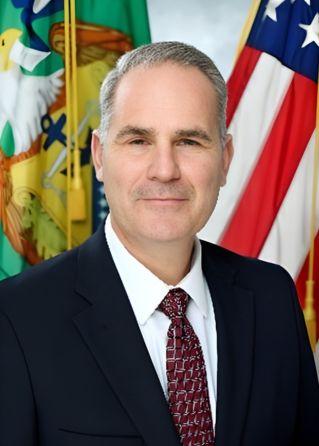
In 1999, Chris Pilkerton was an assistant district attorney in Manhattan, working narcotics cases and eyeing a move into financial crimes. He had a law degree. What he didn’t have was the economics and accounting foundation to take his career to the next level. So he enrolled at SIPA.
His first class was in September 2001—days before the attacks that would reshape his career and the world. Within months, law enforcement’s focus on money laundering and financial crime had taken on an urgent new dimension, and Pilkerton found himself living his coursework in real time.
More than two decades later, Pilkerton serves as assistant secretary for investment security at the US Treasury Department, where he leads the Committee on Foreign Investment in the United States (CFIUS), an interagency committee that reviews foreign investments in American businesses to flag any national security risks. His career has wound through the Manhattan DA’s office, the US Securities and Exchange Commission (SEC), JP Morgan, the US Small Business Administration (SBA)—where he served as acting administrator just prior to the early months of COVID-19—and then at the White House to implement the pandemic-era economic policies. Along the way, he has held teaching and research appointments at the Harvard Kennedy School, Georgetown, Johns Hopkins, Brown, and Catholic University. He has written three books on public policy, earned a Fulbright teaching fellowship in Poland, and been named one of Fortune magazine’s “Fifty Heroes of the Fortune 500.”
“As the phrase goes, it’s a long and winding road,” Pilkerton says. “But it’s really exciting to see when all these various threads come together, and that collective experience can translate into a public policy mission.”
When he came to SIPA at a key inflection point in his career, Pilkerton faced a choice: pursue a business degree or an MPA. He chose SIPA deliberately.
“Public policy is something that has always been a part of my focus,” he says. “I didn’t want to get into a lane that was sort of an impractical public policy path. And SIPA offers you the opportunity to take a lot of what would traditionally be business school classes with really excellent professors—finance, economics, accounting, statistics. But there was always that lens of ‘how are you going to be able to use this and translate it into public policy?’”
That combination—rigorous quantitative training filtered through a public policy lens—is at the heart of the Executive MPA (EMPA). Designed for mid-career professionals, the EMPA positions students to advance in public, nonprofit, and private sectors without leaving behind their work and life commitments. For Pilkerton, that meant showing up on weekends while working full-time, surrounded by peers who were doing the same.
The skills Pilkerton built at SIPA—briefing executives, distilling complex policy into a two-page memo, preparing arguments from every angle—proved as durable as the technical knowledge. “The class work was not just about finance and accounting and economics,” he says. "It truly was ‘how does public policy work in a way that translates into being manageable, digestible, and effective by those actually implementing it?’” He credits Professor William B. Eimicke, director of the EMPA program, and other faculty for sharpening those skills.
For his second-year thesis, Pilkerton analyzed money laundering from an international perspective—a topic he was actively working on as a prosecutor. “Academia met my current professional activities,” he says. “It was very helpful to kind of think through those things as I was actually dealing with them in real time."
Pilkerton’s current position—sitting at the intersection of foreign investment, national security, and economic development—is increasingly central to US policy. His advice for those considering a similar path is to start with fundamentals before specializing.
“Foundationally, some of the almost baseline skills that aren’t necessarily related to economic statecraft or any discipline in particular are important,” he says. “How do you engage with the public policy community? How do you learn to digest what can be volumes and volumes of information into a two-page memo?” From there, he says, students should develop a deep understanding of history, the evolution of the world order over the last 50 to 60 years, and the relevant technology in their chosen sector—whether energy, agriculture, health, or another field.
“It’s OK to walk in as a generalist, recognizing that the deeper you go, you might develop a specific skill set,” he says. “And then that potentially could bring even more value to your public policy career.”
For students uncertain about whether to pursue public service, Pilkerton has no doubts about its value. During the pandemic, leading up to the rollout of the Paycheck Protection Program, he watched career employees at the SBA and Treasury—people who had served 30 years and could have retired—stay on to help navigate an unprecedented crisis.
“Public service is a mission,” he says. “That institutional knowledge is so important. Understanding the law, understanding the authorities, understanding what’s worked and what hasn’t worked practically in the past is incredibly important—not just to the career civil servants but, almost more importantly, to the political folks who are making those decisions.” He wrote about those unsung civil servants in his 2024 book, Plandemic. “They were incredibly important to helping our country get through a very, very difficult time. You’ll never know their names.”
When asked for his favorite SIPA memory, Pilkerton doesn’t cite a single class or professor. He thinks about 8 a.m. Saturday classes, meeting classmates for coffee at 7 a.m., a cohort of bankers, UN staffers, nonprofit leaders—all of them showing up week after week, figuring it out together.
“I can unequivocally say, for me, and I think most everyone in my class, the answer was yes [to the question of whether enrolling at SIPA was the right decision],” he says. “But it doesn’t mean that it’s easy. And so that camaraderie and that support was fantastic.”
Pilkerton started at SIPA just days before the world changed. More than two decades later, he's still doing the work that moment set in motion—and still drawing on what he learned in those Saturday classrooms to do it.