Image
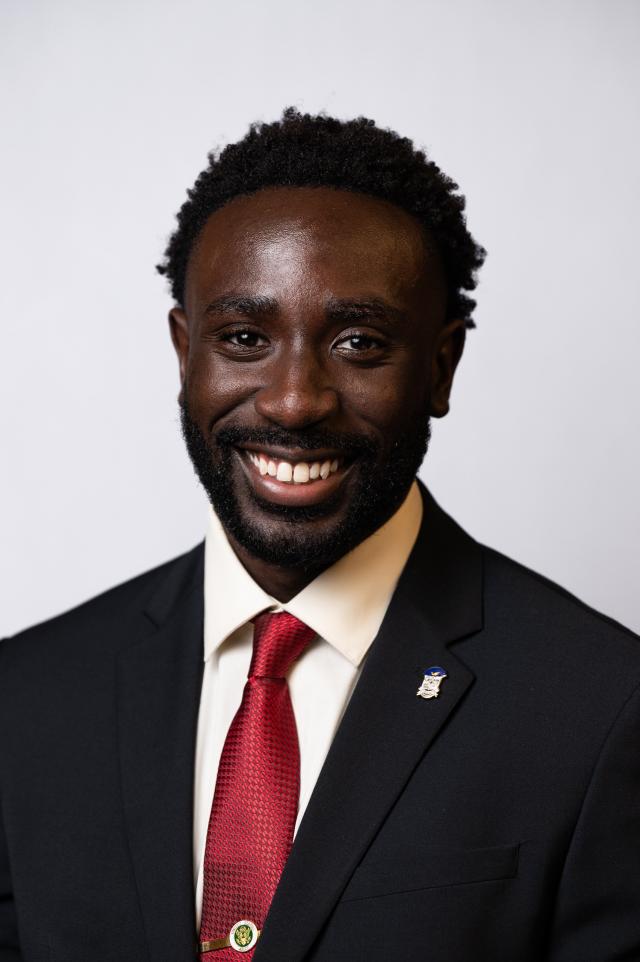
Born to Ghanaian immigrants and raised in the Bronx, Khalil Ibrahim MPA ’26 came to SIPA through the Rangel Graduate Fellowship, a highly competitive program that prepares young leaders for careers in the US Department of State’s Foreign Service. Ibrahim shared his experiences of SIPA, life in New York, and what he plans to do after graduating.
What attracted you to pursue your graduate studies at SIPA?
In some ways, I’m a legacy student – both my younger brother and my uncle studied at SIPA. I had frequent interactions with alumni and current students, which gave me insight into the school’s community.
SIPA’s flexible curriculum was also a major draw. The relatively small number of required courses allowed me to tailor the program to my specific interests, especially compared to other policy schools. However, I’ve been frustrated with scheduling constraints that have prevented me from taking a lot of classes that I would have liked to take. SIPA offers so much that it’s impossible to do everything!
The location was another major benefit. I grew up in New York City, so SIPA offered an opportunity to live closer to friends and family. Columbia University’s reputation was also a driving factor–earning a degree from an Ivy League institution felt like a significant personal milestone.
What first sparked your interest in international affairs and public policy? When did you realize you wanted to pursue a career in public service?
My interest in public service really started in high school, when I had the opportunity to partake in the Future Law Enforcement Youth Academy, created by the FBI. The program exposed me to career opportunities in the public sector, including international relations. That in turn prompted me to pursue my undergraduate studies in international relations at American University in Washington, DC.
I found it profound to be in the epicenter of public policy and international relations, and [that environment] inspired me to find my own path. My experience in DC further solidified my desire to work in global affairs and public policy.
Which classes, professors, or moments have been most influential for you?
There are a couple things in particular that stand out to me. The International Fellows Program with Ambassador Victoria Nuland was particularly influential. It gave me a unique opportunity to develop relationships with students throughout the entire Columbia system, not just SIPA.
Economic Statecraft and China was also a standout course. It opened my eyes to how China actually acts in the international arena compared to how people perceive China. [The course] It challenged common narratives, especially the more sinophobic arguments about the Chinese threat, and pushed me to analyze China’s actions through a more strategic lens.
What sparked your interest in China and economic statecraft?
My internship experience over the summer. I had the opportunity to intern at the US Consulate General’s political economy section in Osaka, Japan. During my 10-week tenure, I frequently met with Department of Defense officials working on China-related issues – exposing me to the strategic dimension of US-China relations. So when I got back [to SIPA], I wanted to understand China better since I hadn’t been exposed to it prior to my internship. That’s how I ended up taking the class.
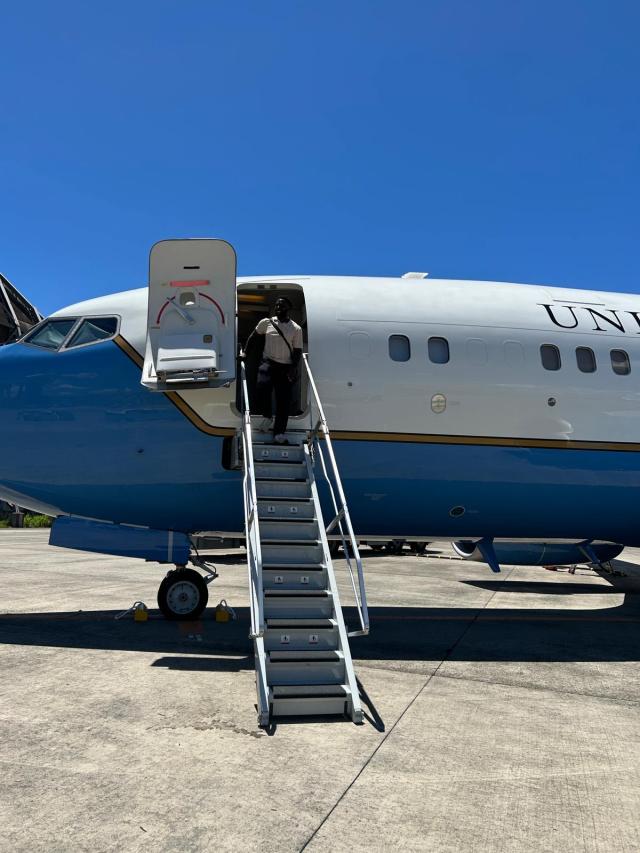
Spending the summer in Japan sounds fascinating, how did you find the experience?
I found it [the internship in Japan] profound and formative, both professionally and personally. It was exciting to work with senior military officials and draft high-level policy memos on developments in the region. I was also able to support a presidential delegation to Japan – an experience that ultimately allowed me to make it onto Air Force One. That was definitely a career highlight!
Being able to travel and support delegates really developed my ability to write and operate in fast-paced environments. The office was also small, which meant that I had to assume a lot of different responsibilities.
How has your time at SIPA challenged or reshaped the way you think about global issues?
Because SIPA has a large number of international students, it forces you to confront international perspectives that you wouldn’t have had to confront at a school with less diversity.
Those perspectives often challenge the assumptions embedded in US-focused coursework. Conversations with my peers have exposed me to issues ranging from Kashmir to Thailand and Cambodia, things that I wouldn’t have engaged with if it weren’t for the diverse student community.
Being at SIPA has also shown me how many opportunities there are to pursue diplomacy in New York. A great example is The Africa Center, which is for people interested in African affairs, the continent, and its culture. As someone with Ghanaian roots, I’ve realized how many opportunities exist here to engage with the continent professionally and culturally.
How do you balance the academic intensity of SIPA with life outside the classroom? What helps you recharge?
For me, it comes down to people. Being able to spend time with my friends allows me to deepen the relationships I’ve built since coming here. Something as simple as going to Arts and Crafts [the local pub] after class or having a Super Bowl party with some of my friends allows me to decompress from the academic rigor of SIPA.
What has it been like returning home to New York City?
Living in New York can be challenging. It’s a busy, expensive city and at times it can feel lonely. It’s also easy to get lost in the issues going on around the city, the things that make you and your friends uncomfortable. Recently, the Bronx [my native borough] has undergone a lot of gentrification and it’s been difficult to see my neighborhood change and people being forced to move out.
Finding the good things is therefore something you have to live with and work with on a day-to-day basis. But it feels like there’s always another problem that arises. However, New York will always be my home – even if I wished there was a different way for the city to develop.
Looking ahead, what kind of impact do you hope to have through your career? What new tools have you developed at SIPA?
I’m aspiring to work with development on the [African] continent. I hope to get better access to resources and improve their lives, whether through development initiatives or policies that expand opportunity. If I can contribute in tangible ways, that would feel exceptionally meaningful to me.
My time at SIPA has strengthened my technical skills and policy toolkit. A great example is the Capstone I’m currently working on. Together with the Government of Belize’s Ministry of Education, Science and Technology, I’m working to help implement new disability legislation. The project has in many ways given me foresight into what I want to accomplish with my career – helping people in tangible ways.
Fascinating, can you tell me more about that experience?
Sure, as part of the Capstone workshop I’m supporting the language in the legislation to make it more accommodating to people with disabilities. I’m personally working with two pieces of legislation, the Labor Act and the Occupational Safety and Health Act.
I never had any experience in policy prior to this Capstone. It has therefore been very impactful to feel that I contribute to the improvement of someone else’s life. It makes me feel like I’m part of a process that helps marginalized people get a better footing. That makes me feel a sense of accomplishment.
What’s one piece of advice you would give your pre-SIPA self – or to someone considering applying?
Take the time to enjoy yourself. Take every opportunity to invest in your relationships because they will define your time here. In my first semester, I was overly focused on performance. Remember that you’re admitted for a reason. Trust that, and don’t be so hard on yourself.