Image
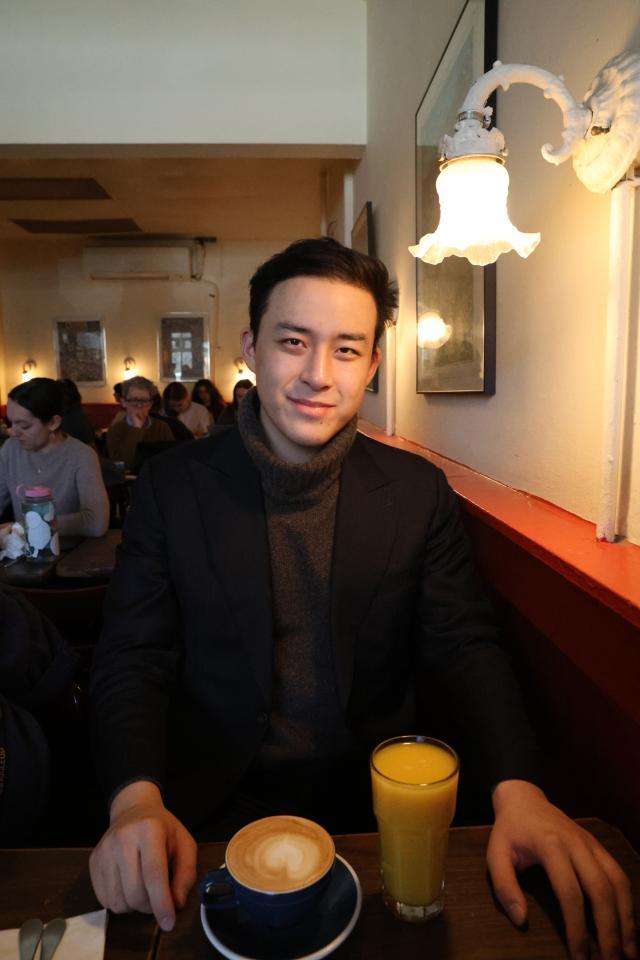
Liam Lau MPA ’26 was attracted to SIPA because of its location in New York City, its academic rigor, and because the School’s a microcosm of the world. As an extrovert interested in studying global finance and US-Chinese trade relations, he’s made friends from all over the world while also developing the necessary skills to be a future policymaker.
What inspired you to pursue your graduate studies at SIPA?
SIPA is the premier destination for policy schools not just in the United States, but the entire world. I came here to understand who I am, what I should be, and how I can build more bridges in an increasingly polarized world.
I think SIPA has a great combination of proximity to New York, which is a global financial hub, while simultaneously offering the academic rigor of a top Ivy League school. It gives you the chance to learn from the best global practitioners. The combination of international economics and international politics is what attracted me to SIPA specifically. If you asked me if I’d do it again, I’d have no second thoughts about coming here again.
What’s something unexpected that you’ve found at SIPA?
How real things are. You come to an Ivy League school with the expectation that you’re sheltered from the real world. However, because of SIPA’s uniquely international student body, the International Affairs Building is a microcosm of world politics. Because you have friends from every corner of the planet, whatever happens in the world, you feel it. For example, witnessing unprecedented changes in trade policies as I was sitting in an economics class, discussing the substantial implications of the changes for people all over the world.
What’s a challenge that you’ve encountered and overcome at SIPA?
The most unexpected challenge at SIPA is time management. A lot of people come in with the expectation of having made it, while in reality you’re just getting started. Prior to coming to SIPA, my mentors, including my father, stressed the importance of time management. At the time, I didn’t understand the meaning or importance of it. However, at SIPA, because the number of classes offered is so vast, you’re forced into being highly selective – balancing academics with life and professional opportunities.
SIPA offers a lot, and an unexpected challenge is knowing which classes and opportunities to pick because there simply isn’t enough time to do everything. I’ve learned to forgo certain opportunities and prioritize, because you don’t want to do things only from a quantitative perspective, but also from a qualitative perspective.
SIPA is a big community. How did you find your own community within that?
While I’ve always been an extroverted individual, I know that if you connect and resonate with people on an interpersonal level and just be yourself, you’ll find your friends. Because SIPA is a microcosm of the world, you can grab a coffee with a Swede person at Publique and do a group project with a Saudi downstairs in Lehman. You don't have to create a false sense of identity – if you stay true to yourself, SIPA will help you find friends. While it’s impossible to see eye to eye with everyone, the fact that you’ve shared some of the most formative years of your lives together at SIPA will always mean something.
How has having friends from all over the world shaped your perspective?
Studying international affairs and international political economy, you’re constantly exposed to theory. However, when you come here, you realize everything is real. At SIPA, you’re not only learning about topics – you’re also feeling them. For example, there was widespread concern about the future of the entire international economic cooperation when trade relations were nearly upended last April. It was fascinating to have witnessed such a historical moment while sitting in an economics class, listening to your professor and classmates discuss it.
How do you like studying in New York City?
New York demands 150 percent of yourself. Studying here therefore requires you to become a time-management master. Either you become one voluntarily or you’re forced into becoming one. You don’t have a choice. Being forced into becoming a master of your own time is an invaluable skill for future policymakers. As a policymaker, you’ll always have to prioritize how to best spend your time.
How are you making the most out of New York City?
The city is part of America, but at the same time it’s not. We have to constantly remember that it's a privilege to be studying in New York and at Columbia. It’s easy to get distracted by the fancy skyscrapers, Central Park, or the matcha lattes, but the most important thing is remembering why you’re here: to learn and hopefully make the world a better place, or at least direct it toward a better place. But at the same time, it’s important to take care of your tummy and visit some Asian restaurants. My favorite fusion is the Chinese-Latino La Dinastia on West 72nd Street; their boneless fried chicken is second to none! Also, do grab a hot bowl of Fukuoka-style Ramen Danbo if you’ve got the time to drop by West Village—it’s the best.
What are your plans post-graduation?
I’m currently working as a program assistant for the International Finance and Economic Policy (IFEP) concentration and as a research assistant to IGP’s Julian Gewirtz. My focus is on the intersection of international affairs, economics, and finance..
As much as I’d like to stay [at SIPA] for another year, as I transition into the next stage of my life, it’s important not to be anxious over finding a job. Because you're fundamentally here to learn from the best and brightest of the whole world. Learning from them and using that knowledge should give you a lot more confidence to deal with whatever career you choose to pursue afterwards. There’s a well-known proverb: “Give a man a fish and you feed him for a day. Teach a man to fish and you feed him for a lifetime.” SIPA has taught me how to fish.
Instead, I try to be forward-looking rather than nostalgic. If you’re too focused on what will happen afterward while at SIPA, I think that’s very self-defeating. Always remember why you’re here to begin with – to learn how to become a future decision-maker.