Image
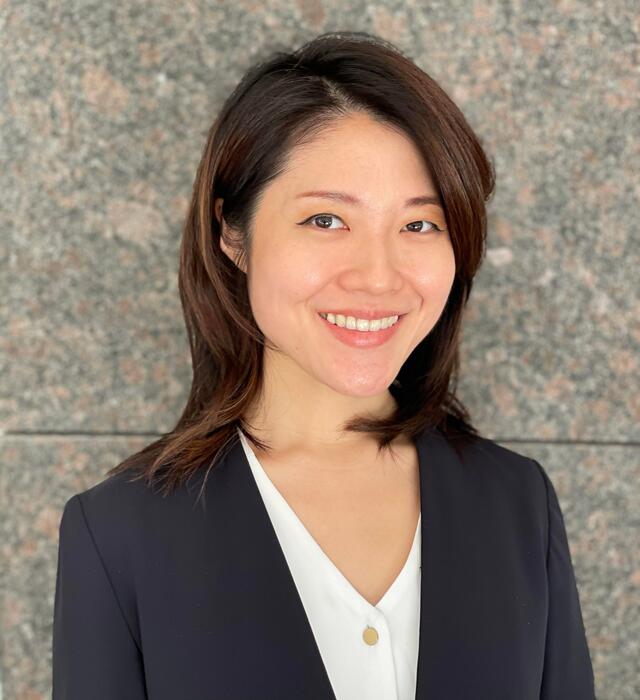
Yuko Shimada MIA ’15 is an associate analyst at Moody’s Investors Services in Tokyo. She has previously worked at Deloitte and Citi, and has interned at the Council on Foreign Relations in Washington, D.C.
An Energy and Environment concentrator, Shimada’s Capstone workshop with the United Nations Economic Commission for Europe (UNECE) helped to streamline policies related to liquefied natural gas.
The following interview, part of a series conducted by Ahmad Jamal Wattoo MPA ’21, has been condensed and edited for clarity.
Why did you choose to attend SIPA?
In my undergraduate years in Washington, D.C., I studied international politics with a focus on East Asia, and did multiple internships at foreign-policy think tanks and nonprofit organizations outside of school. In the spring semester of my sophomore year, a massive earthquake devastated the northeastern part of Japan. In the midst of that crisis, it was inspiring to see how both the academic and professional communities collaborated to raise global awareness.
Once the disaster was out of the headlines, Japan policy experts shifted their focus from disaster dialogue to issues related to energy, and especially nuclear energy. This sparked my interest in energy policy and its impact on geopolitics. SIPA’s MIA program and its Energy and Environment concentration offered exactly what I was looking for in a graduate program — the integration of international affairs and energy policy.
Which courses would you recommend to current SIPA students?
My most memorable courses were Cost-Benefit Analysis and Energy Systems Fundamentals. For those with interests in energy or finance, I would also recommend Energy Project Finance, Accounting, and Corporate Finance.
Did you participate in any extracurricular activities at SIPA?
Yes, and I highly recommend all students do so! I was co-president of the Japan Study Student Association (JASSA), which organized language tables, sushi parties, and an annual trip to Japan. We hosted numerous speaker events, inviting distinguished guests like Yukio Okamoto, a former diplomat, and Hidehiko Yuzaki, the governor of Hiroshima.
I was also a member of the SIPA Energy Association (SEA). I particularly enjoyed participating in the Houston Energy Trek sponsored by SEA and Columbia Business School, where we spent a couple days visiting leading energy-related businesses in the area.
How was your experience working on your Capstone project with the United Nations Economic Commission for Europe?
Our Capstone’s objective was to assess recent liquefied natural gas trends. We conducted research on global supply and demand, pricing mechanisms, and disruptive technologies to inform UN policymakers in formulating streamlined policies on natural gas. It was rewarding to have our research be published on the UNECE website, and to work alongside our talented advisers and teammates who included commodities research analysts, government officials, consultants, and journalists.
What made you choose to work at Moody’s Investor Services? What does your average day of work at the organization look like?
My wonderful Capstone experience inspired me to pursue a career that involved research. I came across the position with Moody’s this year, and I was lucky my previous experience in investment banking and energy-related consulting matched the experience they were seeking.
Moody’s is a rating agency, and I help rate about 10 companies across four sectors. Our tasks differ slightly from a typical sell-side or buy-side research firm. An average day at Moody’s depends on the time of year; peak days are during earnings season. I might begin my morning with an annual review meeting with an issuer. Our team would ask questions that help us create forward-looking financial projection models. After lunch, I would hold short catch-up meetings with my colleagues. In the evening, I typically update and revise research reports.
All this may change in the event of an M&A [merger and acquisition] or unexpected earnings results, for which we would hold a rating committee to discuss where issuers stand in terms of their ratings.
Do you have any parting advice for Columbia SIPA students who are currently looking for internships and full-time positions?
Try to spend as much time with people in your one or two years at SIPA — in person, when it’s safe to do so! The conversations you have with them may persuade you to apply where you wouldn’t have considered before.
When I applied to Moody’s, I contacted a fellow SIPA graduate on LinkedIn and asked about her experience as a former employee. This was valuable since it helped me envision my daily tasks at the firm.
Start your internship application process early and consider taking multiple short-term internships in the summer between your first and second year.
When in doubt, there’s always someone at SIPA who can answer your questions. I happened to attend classes with former bankers and consultants in my two years at SIPA, and on top of being my good friends, they were my mentors when I was undergoing the application process.
Good luck and have fun!