Image
Are you looking for one great book this summer — or maybe a few? Once again we’re pleased to share recommendations from selected SIPA faculty. They’ve highlighted books that span a wide range of policy and international affairs topics. Some texts are introductory, while others assume a bit more background in their subjects. They’re all optional, but if you dip into any of them, your summer is likely to be just a little more interesting.
Happy reading!
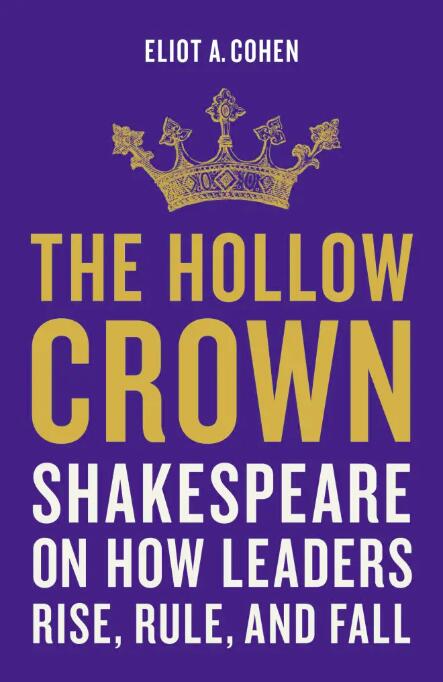
The Hollow Crown: Shakespeare on How Leaders Rise, Rule and Fall, by Eliot A. Cohen (Basic Books, 2023)
A wise professor of mine once said, to understand international politics or war, read fiction. He might have said, “Read Shakespeare.” Eliot Cohen has dissected the Bard’s repertoire of plays to help us make sense of, say, the ruthlessness of Paul Kagame (see Julius Caesar or Richard III) or the psychology of Abraham Lincoln (Henry IV, Coriolanus). The palace dynamics of Shakespeare’s plays are remarkably similar to those of today’s assortment of megalomaniacal leaders. While the history of wars is both farce and tragedy, leaders make the decisions. Shakespeare’s pen can teach future statesmen a lot about our understanding of power.
— Lionel Beehner, Senior Editorial Director; Adjunct Associate Professor of International and Public Affairs
New Cold Wars: China's Rise, Russia's Invasion, and America's Struggle to Defend the West, by David E. Sanger with Mary K. Brooks (Crown, 2024)
The new era of Great Power rivalry is of enormous consequence for the clean energy transition and energy security. In his new book, David Sanger of the New York Times does a masterful job explaining how the promises of a newly democratic Russia and an economically integrated and prosperous China went awry. Sanger gets a remarkable number of senior national security and economic leaders to talk on the record about how geostrategic considerations came to dominate relations between great powers, and thus how the American foreign policy establishment’s belief in the 1990s in the international rules-based order and globalization evolved into today’s dominant framework of geopolitical competition, rivalry and security.
— Jason Bordoff, Professor of Professional Practice in International and Public Affairs; Founding Director, Center on Global Energy Policy
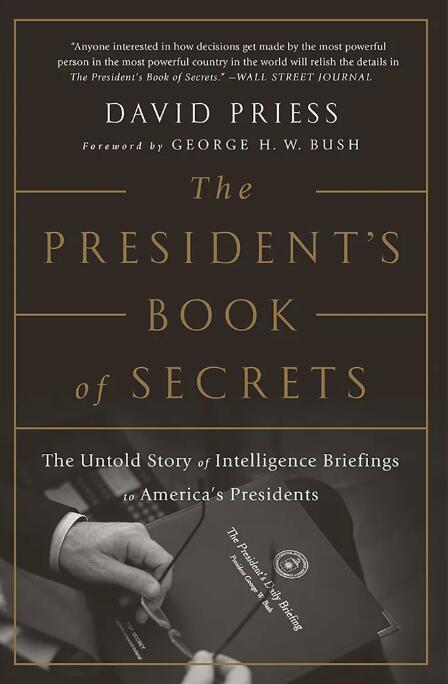
The President’s Book of Secrets: The Untold Story of Intelligence Briefings to America's Presidents from Kennedy to Obama, by David Priess (Public Affairs, 2016)
Based on interviews with former presidents and vice presidents, intelligence community (IC) leaders and analyst briefers, Priess offers a unique window into the complicated relationship between the IC and its “first customer” – the president of the United States. Filled with anecdotes, the book describes how different presidents chose to receive the President's Daily Brief (PDB) – or not – who had access to it, and how the PDB is produced by the IC. The author, a former CIA analyst and PDB briefer, provides first-hand insights into the many aspects of this important document.
— Peter Clement, Visiting Senior Research Scholar, Arnold A. Saltzman Institute of War and Peace Studies; Adjunct Professor of International and Public Affairs
From Ideas to Impact: A Playbook for Influencing and Implementing Change in a Divided World, by Michael Sheldrick (Wiley, 2024)
Glorious visions and ambitious targets are hallmarks of today’s international development agenda. Global Citizen cofounder Michael Sheldrick challenges us to go beyond the rhetoric of empty promises and ubiquitous calls to action. Drawing on his personal experience as a policy entrepreneur and showcasing diverse historical precedents, Sheldrick articulates a practical, compelling, and timely “playbook” for creating a more sustainable and equitable world. The book is a must-read for current and aspiring development leaders and practitioners.
— Glenn Denning, Professor of Professional Practice in International and Public Affairs; Director, Master of Public Administration in Development Practice (MPA-DP)
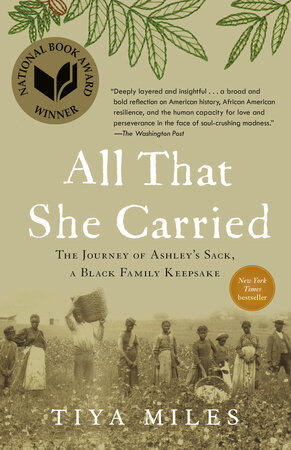
All That She Carried: The Journey of Ashley’s Sack, a Black Family's Keepsake, by Tiya Miles (Random House, 2021)
Both our humanity and our inhumanity are revealed in this narrative about a small sack — preserved by a family through multiple generations — that was first given by an enslaved mother to the young daughter from whom she would soon be separated by further enslavement. Intersectionality and gender, courage, and resilience in the face of indescribable evil are woven through every page of this extraordinary book.
— Yasmine Ergas, Senior Lecturer in the Discipline of International and Public Affairs; Director, Gender and Public Policy specialization
Plurality, by by E. Glen Weyl, Audrey Tang, and Community (independently published, 2024)
Amidst a chorus of alarming voices on the potential of AI, Plurality stands out as a boldly optimistic alternative. Fully cognizant of all the harms brought by these new technologies, Tang, Weyl, and the Plurality community chart a path to reclaim democracy not against tech but with it, and share their roadmap to seize the radical potential of collaborative technologies. (The book has the added advantage of being fully accessible online.)
— Camille François, Lecturer (part-time) in International and Public Affairs
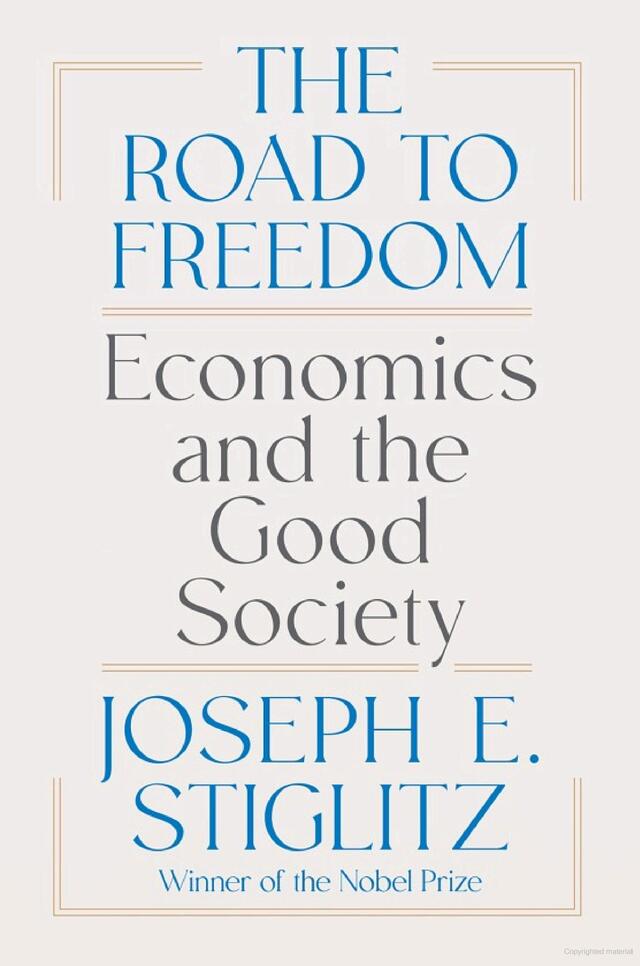
The Road to Freedom, by Joseph Stiglitz (W.W. Norton, 2024)
This book provides a magnificent analysis of what it truly means to enhance individuals’ and society’s freedoms. A quote from the philosopher Isaiah Berlin succinctly captures the idea of a society without a state — one that is unable to correct for disparities in initial conditions, address externalities, or regulate power: “Freedom for the wolves has often meant death to the sheep.” This is a must-read for anyone who wants to think about different economic and social systems and their implications.
— Martín Guzmán, William S. Beinecke Visiting Professor of Public Policy
The Myth of Artificial Intelligence: Why Computers Can't Think the Way We Do, by Erik J. Larson (Harvard University Press, 2022)
There is a great deal of hype about the implications of artificial intelligence for everything from the future of work to the future of warfare, with experts warning that machines may soon entirely replace human decision-making. What I really enjoy about Larson's book is that he punctures much of the hyperbole surrounding AI, systematically showing the ways in which machines cannot replicate core elements of human intelligence. Despite tackling a highly technical topic, Larson's book is accessible to a non-technical audience.
— Erica Dreyfus Lonergan, Assistant Professor of International and Public Affairs
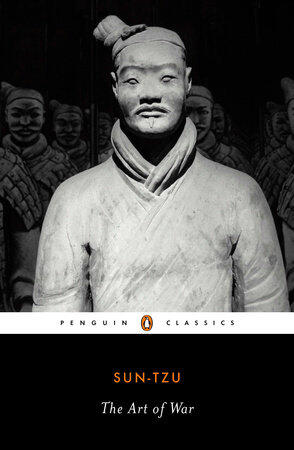
The Art of War, by Sun Tzu (various publishers)
As future policymakers and leaders, SIPA students should heed the enduring wisdom of the Chinese strategist Sun Tzu: “The most difficult things in the world must be done while they are still easy, the greatest things in the world must be done while they are still small. For this reason, sages never do what is great, and this is why they can achieve that greatness.” About 2,500 years later, it remains true that early planning, collaboration, communication, and compromise are the keys to later success — in politics, policy, and indeed most of life’s endeavors.
— Michael Nutter, David N. Dinkins Professor of Professional Practice in Urban and Public Affairs
Chip War: The Fight for the World’s Most Critical Technology, by Chris Mitchell (Scribner, 2022)
This book tells the fascinating history of the semiconductor industry, both the nitty-gritty of how the technology has advanced and the policy efforts to attain global leadership. It’s an important story, told in an engaging and balanced way. Semiconductors are at the core of the digital revolution, and competition in the industry is sure to shape global politics and economics for the foreseeable future.
— Eric Verhoogen, Professor of International and Public Affairs and of Economics; Co-Director, Center for Development Economics and Policy
Age of Revolutions: Progress and Backlash from 1600 to the Present, by Fareed Zakaria (W.W. Norton, 2024)
We are living in a time of profound upheaval and rapid disruptions to the rules that govern society. In his provocative new book, Fareed Zakaria argues that we are witnessing a fundamental reordering of global politics, whereby revolutions within nations – around technology, finance, and identity politics – are happening simultaneously as revolutions among nations. The result, he says, is a “world in overdrive.” From the Glorious Revolution of the Netherlands, to the intellectual revolution of the Enlightenment, radical advances are prompting sharp backlashes, reactionary forces, and populist demagogues, from Lenin to Trump. Zakaria brilliantly captures today’s revolutionary world, whose future is anything but certain.
— Keren Yarhi-Milo, Dean, Columbia SIPA; Adlai E. Stevenson Professor of International Relations
Looking for more? In case you missed them, here are SIPA’s recommendations from 2023.