
Data Science for Policy
The Data Science for Policy (DSP) Concentration teaches students to understand and apply computational and data analytics, econometrics, and quantitative analysis to policy-related issues.
With the rise of big data and machine learning, large organizations, governments, and private sector firms seek top talent with advanced data skills. The DSP Concentration provides opportunities to pursue advanced work in computational and data analytics, econometrics, and quantitative analysis and allows students to apply these techniques to a broad array of policy issues.
DSP concentrators develop the skills and knowledge needed to help solve social problems, devise solutions backed by data, and further the public good. Our curriculum trains students to combine state-of-the-art computing and data analytic methods with well-informed public policymaking.
Who It’s For
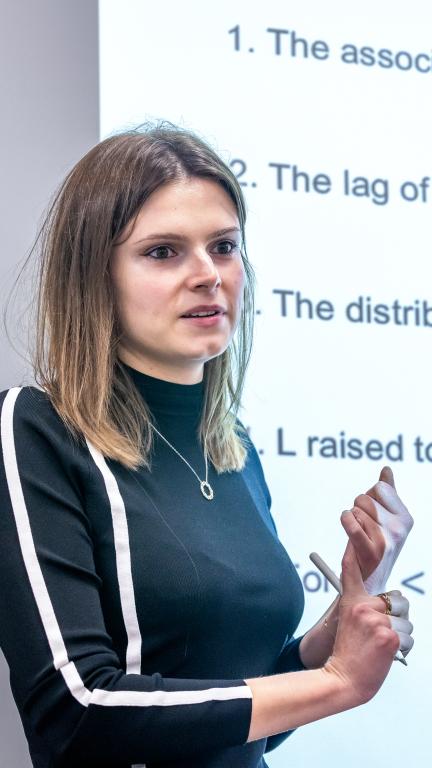
DSP is designed for students who wish to pursue careers that leverage data science and quantitative reasoning to develop, implement, and assess public policies in the public, nonprofit, and private sectors.
Many students who choose this concentration have some professional experience or educational background in quantitative analysis and/or computational analysis, though the curriculum does not require prior coursework in these fields.
Curriculum and Courses
DSP's two tracks provide students with opportunities to pursue advanced work to study and utilize data to inform a wide variety of policy and research questions. As such, we offer a unique curriculum at the intersection of data science and quantitative analysis for public policy. The Data Analytics track focuses on computational and data-analytics tools. The Quantitative Analysis track focuses on statistical and econometric methods. Students can take courses in coding, econometrics, machine learning, big data methods, or data visualization and use these skills to address the world's most urgent policy challenges.
DSP Students complete 15-credits, structured as follows:
DSP Students complete 15-credits, structured as follows:
-
All students take Computing in Context, an applied course that introduces foundational programming skills in Python through the lens of public policy. Using real-world scenarios, students learn key computing concepts such as data collection, cleaning, pseudocode writing, and the use of Python libraries to analyze and solve policy problems. The course builds transferable skills that support future coursework and professional application.
-
Students select at least two advanced courses (6 credits total) from a curated list that includes data analytics, machine learning, advanced statistics, and computational methods. These courses expand students’ technical expertise and frequently involve applied projects or case-based learning.
-
Students complete at least two elective courses (6 credits total), selected from either the Data Analytics track or the Quantitative Analysis track, or a combination of both. Electives explore areas such as causal inference, policy evaluation, data visualization, and topic-specific modeling.
Optional Minors Available
– Data Science for Public Policy
– Quantitative Analysis for Public Policy
– Program Evaluation for Public Policy
Student Career Paths
Our concentrators go on to work in fields such as data analysis, policy analysis, AI, evaluation research, survey research, and/or become policy professionals who develop, implement, and assess social programs.
Related Degree Programs

Designed for students looking to facilitate and lead international cooperation, the MIA equips students to understand international political and legal institutions, and develop the skills of conflict resolution, diplomacy, and inter-cultural competency necessary to achieve change on the worldwide stage.
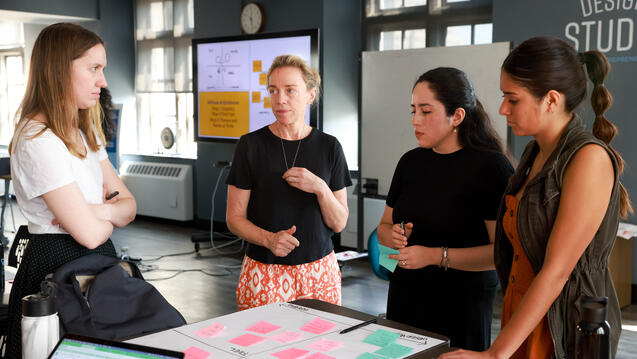
Developed for students looking to lead the policymaking process, the MPA provides a data-rich analytical education, equipping students to understand policy challenges and to develop, implement, and evaluate policy solutions. The MPA is STEM-designated so that students in all policy domains will be eligible to apply for OPT extensions where relevant.
Contact Us
Cristian (Kiki) Pop-Eleches
Professor of International and Public Affairs; Concentration Co-Director
IAB Room 1401A | [email protected]
Alan Yang
Senior Lecturer in the Discipline of International and Public Affairs; Concentration Co-Director
IAB Room 1309B | [email protected]
Laura Dankowski-Mercado
Concentration Coordinator
[email protected]