
Robert Shapiro
Wallace S. Sayre Professor of Government and Professor of International and Public Affairs; Vice Dean of SIPA
Personal Details
Robert Y. Shapiro is a professor and former chair of the Department of Political Science at Columbia University, and he served as acting director of Columbia’s Institute for Social and Economic Research and Policy (ISERP) during 2008–2009. He is a Fellow of the American Association for the Advancement of Science. He received a Distinguished Columbia Faculty Award in 2012 and in 2010 the Outstanding Achievement Award of the New York Chapter of the American Association for Public Opinion Research (NYAAPOR).
Shapiro specializes in American politics with research and teaching interests in public opinion, policymaking, political leadership, the mass media, and applications of statistical methods. He has taught at Columbia since 1982 after receiving his degree and serving as a study director at the National Opinion Research Center (University of Chicago).
He is co-author of The Rational Public: Fifty Years of Trends in Americans' Policy Preferences, with Benjamin Page (University of Chicago Press, 1992) and Politicians Don't Pander: Political Manipulation and the Loss of Democratic Responsiveness, with Lawrence Jacobs (University of Chicago Press, 2000). His most recent books are The Oxford Handbook of American Public Opinion and the Media, edited with Lawrence R. Jacobs (Oxford University Press, 2011) and Selling Fear: Counterterrorism, the Media, and Public Opinion, with Brigittte L. Nacos and Yaeli Bloch-Elkon (University of Chicago Press, 2011). He is also coauthor or coeditor of several other books and has published numerous articles in major academic journals.
Shapiro served for many years as editor of Public Opinion Quarterly’s "The Polls–Trends" section, and is currently chair of the journal’s Advisory Committee. He also serves on the editorial boards of Political Science Quarterly, Presidential Studies Quarterly, Public Opinion Quarterly, and Critical Review, and is the Chairman of the Board of Directors of the Roper Center for Public Opinion Research. He has been President of NYAAPOR and Councilor-at-Large in national AAPOR.
His current research examines partisan polarization and ideological politics in the United States, as well as other topics concerned with public opinion and policymaking.
Education
- PhD in Political Science, University of Chicago
- MA in Policy Studies, University of Chicago
- MA in Political Science, University of Chicago
- BS in Political Science, MIT
Honors and Awards
- Vice President, Academy of Political Science
- Bruce E. Gronbeck Political Communication Research Book Award, 2014
- Distinguished Columbia Faculty Award, Columbia University, 2012
- Outstanding Achievement Award, New York Chapter, American Association for Public Opinion Research (NYAAPOR), 2010
Research And Publications
In The Media
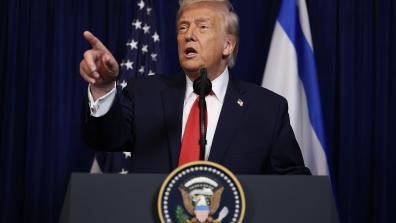
Robert Y. Shapiro told Newsweek: "The low popularity rating, especially falling off among Republicans, is of concern—more so for the Republican Party as the midterm elections approach."
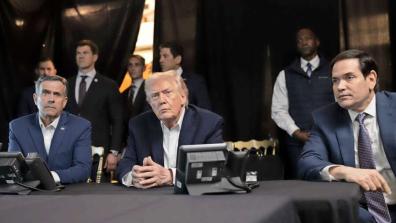
According to Robert Y. Shapiro, professor of International and Public Affairs at Columbia University, the U.S. action in Venezuela “further tarnishes Trump’s image as a peacemaker and Nobel Prize candidate,” although he noted that “the operation was a military success and further established the military and operational capabilities of the United States.”
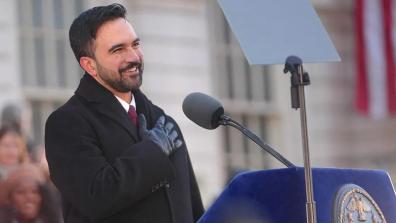
"If he wants to provide free bus service and free child care, these kinds of things cost money," said Robert Shapiro, a professor of international and public affairs at Columbia University
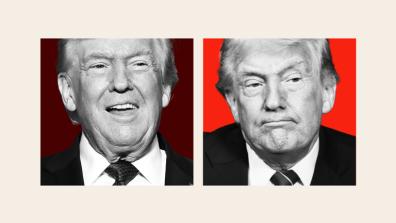
Columbia University professor Robert Y. Shapiro told Newsweek that “getting as far as he has with the settlement in GAZA and the release of the hostages, which looked very good for a time and could now take another bad turn” was a win for Trump’s administration.
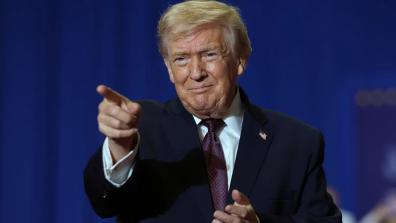
obert Y. Shapiro told Newsweek: "This is the continuing bad news on health care subsidies, steady high prices, the Epstein documents and the seeming cover-up, and the bombing of boats allegedly carrying drugs is more disruption and not helping, and the same for the ICE arrests of people who are far from violent criminals."