
News & Stories
All News & Stories
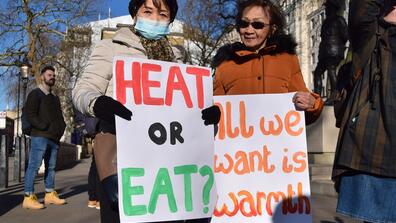
“Regardless of Russia’s gas cutbacks, Europe’s own policies have made shortages and price spikes the new normal,” Jason Bordoff writes.
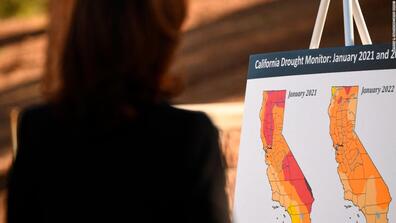
“Climate change administers shocks to the supply chains. They're one-off shocks, but they may be coming more frequently than before,” Geoffrey Heal comments.
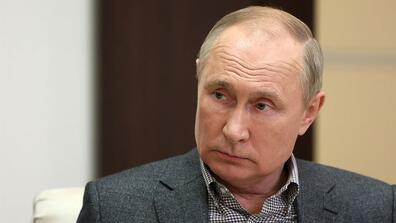
"As Moscow and the West saber rattle over threats of cutting Russian pipeline gas supplies to Europe over the Ukraine crisis, it has become clear that the continent has made little progress in reducing its dependency on Russian gas," the Center on Global Energy Policy scholar Anne-Sophie Corbeau writes.

Arvind Panagariya talks about India's Budget 2022 and its implications on society, the individual consumer and most importantly the economy.
“Therein lies the path of prudence, peace and a diplomatic bargain,” Jeffrey Sachs writes.

“Public service is a calling, and our community depends on public servants to survive and thrive,” Steven Cohen writes.

"If you ask China and the GCC, they’ll tell you that the time is finally ripe. They’re not wrong — several significant changes affecting both sides’ geopolitical interests have taken place in recent years that substantially raise the likelihood of an official agreement," Inbar Pe’er, program coordinator at the Saltzman Institute, co-writes.
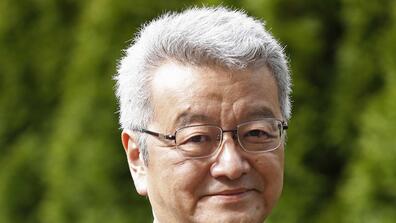
Takatoshi Ito is among the economists and professors cited in the recent research.
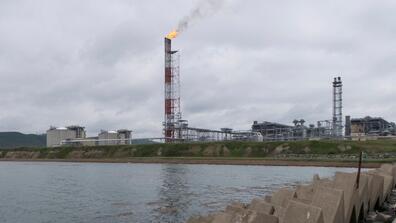
“Oil accounts for roughly half of Russia’s export revenues, so it will be very difficult to impose devastating sanctions on Russia without touching” the energy industry, Eddie Fishman of the Center on Global Energy Policy comments.

Stephen Biddle points out that as early as the first world war, tacticians learnt how to avoid exposing their forces to modern artillery and air power—capabilities as remarkable then as quick sensor-to-shooter kill-chains are today.