
News & Stories
All News & Stories
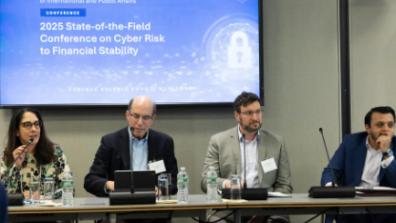
Earlier this year, the New York Fed and Columbia University’s School of International and Public Affairs (SIPA) co-organized the sixth annual State-of-the-Field Conference on Cyber Risk to Financial Stability.
"I would not make any big deal of this," Robert Y. Shapiro told Newsweek. "With so many polls being done, results that look like outliers or noteworthy changes need to be treated as possible due to normal sampling error, where you can get what looks like an outlier one out of twenty times."
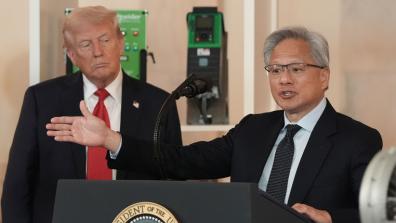
Aaron Bartnick, a former Biden official now at Columbia University’s Center on Global Energy Policy, said there was no obvious reason for Washington to have pivoted so quickly on the security risks of the chips.
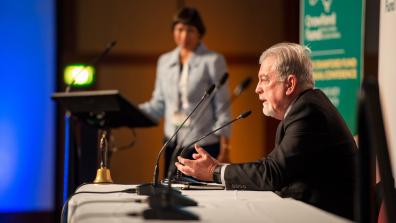
Glenn Denning explains to NSW Country Hour that tackling food security in SE Asia may be the best way for Australia to keep the peace.
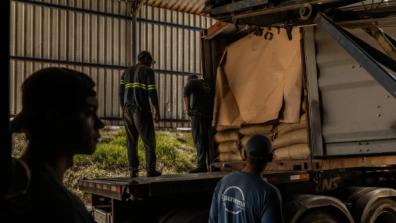
Sanctions are more effective at pushing a country to change its behavior than tariffs, said Edward Fishman, a former State Department official and current scholar at Columbia University who has written a new book on economic warfare.
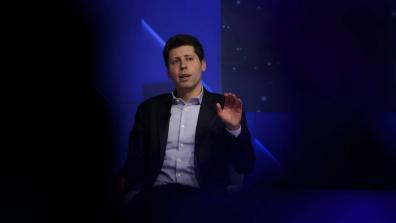
IGP researcher Jen Weedon writes: "The critical question isn't just 'What don't we know yet about how this AI might fail?' but also 'What do we already know, and that we're choosing not to address?'"
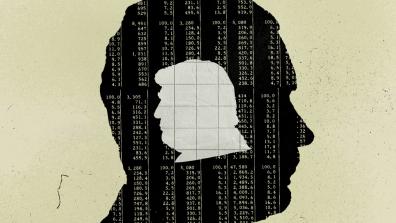
"This isn’t the first time the BLS commissioner aroused presidential ire," writes Tim Naftali. "But at least Nixon faced constraints."
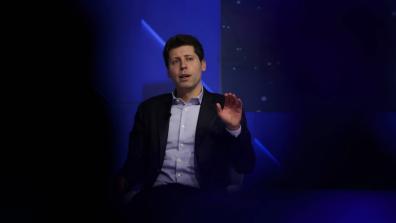
"The critical question isn't just 'What don't we know yet about how this AI might fail?" but also "What do we already know, and that we're choosing not to address?' writes Jen Weedon.


Anya Schiffrin, co-director of the Technology, Policy, and Innovation Concentration at SIPA—and lifelong Upper West Side resident—shares her favorites.