Image
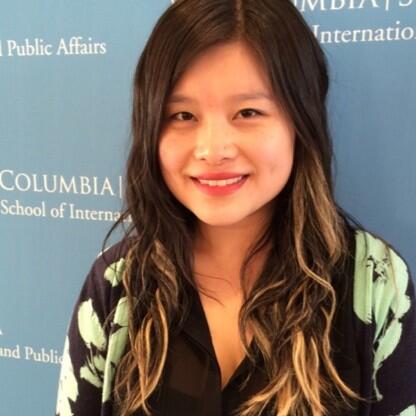
Maggie Li-Calis MIA ’15 has been working for Google as an incident manager — for emerging trends and risk management as well as trust and safety — since April 2020. Before joining Google she worked in the trust and safety departments at Facebook and LinkedIn.
The following interview, part of a series conducted by Ahmad Jamal Wattoo MPA ’21, has been condensed and edited for clarity.
What motivated you to apply to SIPA's Master of International Affairs (MIA) program?
I had been living and working in Ankara, Turkey, for four years, learning about the political and socioeconomic nuances of a geopolitically critical country. I wanted to tap back into my international relations and journalism background and get an advanced degree to dive deeper into some of the issue areas and global forces I saw playing out in Turkey. SIPA was especially attractive because it’s in New York City, which is a global center of many public- and private-sector opportunities.
Which courses that you most enjoyed would you recommend to current SIPA students?
War, Peace, and Strategy, Decision Models, Intelligence and Foreign Policy, Macroeconomics, and Microeconomics.
Did you participate in any extracurricular activities at SIPA?
I was part of the United Nations Studies Working Group's board.
What do you recall about your experience in a Capstone workshop at SIPA? What did the project involve?
I worked on a Capstone project for the U.S. Mission to the United Nations, doing an assessment on U.S. strategic priorities and then producing recommendations. The success of your Capstone project really depends on your faculty advisor and team — I was lucky to have great people in both. Even though not everyone in our team got along super well, we all rallied together in the end to produce a written product that we were proud of. It was also a good experience in seeing how complex and nuanced something as seemingly simple as a guiding document can be in the context of the United Nations.
In your job search, how much emphasis did hiring managers place on your GPA?
There was no discussion about GPA. Hiring managers focus on experiences that inform whether you can do the job you’re applying for, not random metrics.
What made you choose to work in the trust and safety space? What does an average work day look like in your department at Google?
Trust and safety is a really diverse organization of risk response and mediation, policy, engineering, legal, communications, and public outreach. Anyone coming out of SIPA can find a place in trust and safety. My first role was being an intelligence analyst fighting platform abuse by state-sponsored cyber operatives — it totally tapped into my International Security Policy experience, which was my primary interest at SIPA. Nowadays, I do more high-level strategic response and cross-functional program management. My day-to-day [work] changes depending on what’s going on, but generally an average day involves responding to complex issues that come up, pulling together people from multiple teams to figure out a proper remediation measure, as well as planning and executing on longer-term strategic initiatives.
Do you have any parting advice for SIPA students who are currently looking for internships and full-time positions at the organizations where you have worked?
Speaking for tech only, the things that prepared me the most for the job and for the interviews were the complicated projects I worked on — either in courses or extracurricular activities. When I was at SIPA, I definitely over-indexed on subject matter expertise, but that’s not the only thing that a lot of these organizations are looking for. Rather, they look for someone with sound critical thinking skills, strong communication ability, and comfort with operating in ambiguity. I recommend seeking experiences where you can simulate what working in tech is like — namely working with many cross-functional stakeholders who all have competing priorities and demonstrating that you are able to be the connective thread that pulls it all together; projects where you had to manage strategic priorities as well as tactical restrictions and how you prioritize between it all to end with the best possible outcome. It’s also good to have examples of your failures and demonstrate how you learned from them.